
Global Rebar Procurement Guide 2026 Standards, Applications & Strategic Sourcing
CHEONGFULI (XIAMEN) CO.,LTD. | Steel Supply Chain Partner
EXECUTIVE SUMMARY
International rebar procurement is no longer a simple price-per-tonne decision. With diverging standards, tightening carbon regulations, and project-specific performance demands, procurement officers must navigate three distinct challenges:
Challenge Reality Technical equivalence Is Grade 80 the same as HRB500? Compliance validation Does this Mill Test Certificate satisfy local code? Lifecycle value Does “cheaper per tonne” mean higher installed cost?
| Challenge | Reality |
| Technical equivalence | Is Grade 80 the same as HRB500? |
| Compliance validation | Does this Mill Test Certificate satisfy local code? |
| Lifecycle value | Does “cheaper per tonne” mean higher installed cost? |
This guide provides a condensed, cross-reference framework for global buyers. It focuses on what to specify, where to substitute, and how to verify.
CHEONGFULI (XIAMEN) CO.,LTD. does not manufacture. We verify, translate, and mitigate risk—from mill to jobsite.
1. GLOBAL STANDARDS AT A GLANCE
Core Systems & Their Logic
System Typical Grades Design Philosophy GB/T (China) HRB400 / 500 / 600 Strength-first; “E” suffix for seismic ductility ASTM (USA) Grade 60 / 80 / 100 A615 = general; A706 = seismic/weldable BS/EN (Europe) Grade 500B / 500C Mass-per-metre consistency; weldability focus AS/NZS (AU/NZ) 500N / 500E Ductility class explicit (L/N/E)
| System | Typical Grades | Design Philosophy |
| GB/T (China) | HRB400 / 500 / 600 | Strength-first; “E” suffix for seismic ductility |
| ASTM (USA) | Grade 60 / 80 / 100 | A615 = general; A706 = seismic/weldable |
| BS/EN (Europe) | Grade 500B / 500C | Mass-per-metre consistency; weldability focus |
| AS/NZS (AU/NZ) | 500N / 500E | Ductility class explicit (L/N/E) |
Key takeaway: No single system is “better”. They reflect different regulatory histories. The buyer’s task is to map, not judge.
What Procurement Asks vs. What Standards Answer
You ask The standard tells you “Is it strong enough?” Yield strength (MPa) “Will it snap in an earthquake?” Tensile/yield ratio; elongation “Can we weld it?” Carbon equivalent (CEQ) “Will it fit the design?” Nominal diameter; cross-section area “How long will it last?” Corrosion resistance (alloy/coating)
| You ask | The standard tells you |
| “Is it strong enough?” | Yield strength (MPa) |
| “Will it snap in an earthquake?” | Tensile/yield ratio; elongation |
| “Can we weld it?” | Carbon equivalent (CEQ) |
| “Will it fit the design?” | Nominal diameter; cross-section area |
| “How long will it last?” | Corrosion resistance (alloy/coating) |
Rule of thumb: Never specify by “familiar brand name” alone. Specify by performance parameters.
II. STRENGTH MAPPING: THE 20% SAVINGS RULE
Yield Strength Equivalence Table
Application Tier Yield (MPa) GB/T (China) ASTM (USA) BS/EN (Europe) Standard commercial 400–420 HRB400 Grade 60 Grade 400 Heavy infrastructure 500–550 HRB500 Grade 80 Grade 500 Ultra-high load 600–690 HRB600 Grade 100 —
| Application Tier | Yield (MPa) | GB/T (China) | ASTM (USA) | BS/EN (Europe) |
| Standard commercial | 400–420 | HRB400 | Grade 60 | Grade 400 |
| Heavy infrastructure | 500–550 | HRB500 | Grade 80 | Grade 500 |
| Ultra-high load | 600–690 | HRB600 | Grade 100 | — |
The 20% Rule
Upgrading from 400MPa tier to 500MPa tier reduces steel volume by approximately 20% for the same design load.
Net effect:
- ✓ Lower material tonnage
- ✓ Reduced freight cost
- ✓ Faster installation (less congestion)
- ✓ Lower carbon liability
Question to ask suppliers:
“What is the tonnage delta if I specify Grade 80 instead of Grade 60?”
III. SEISMIC & SAFETY: THE DUCTILITY LAYER
When Strength Is Not Enough
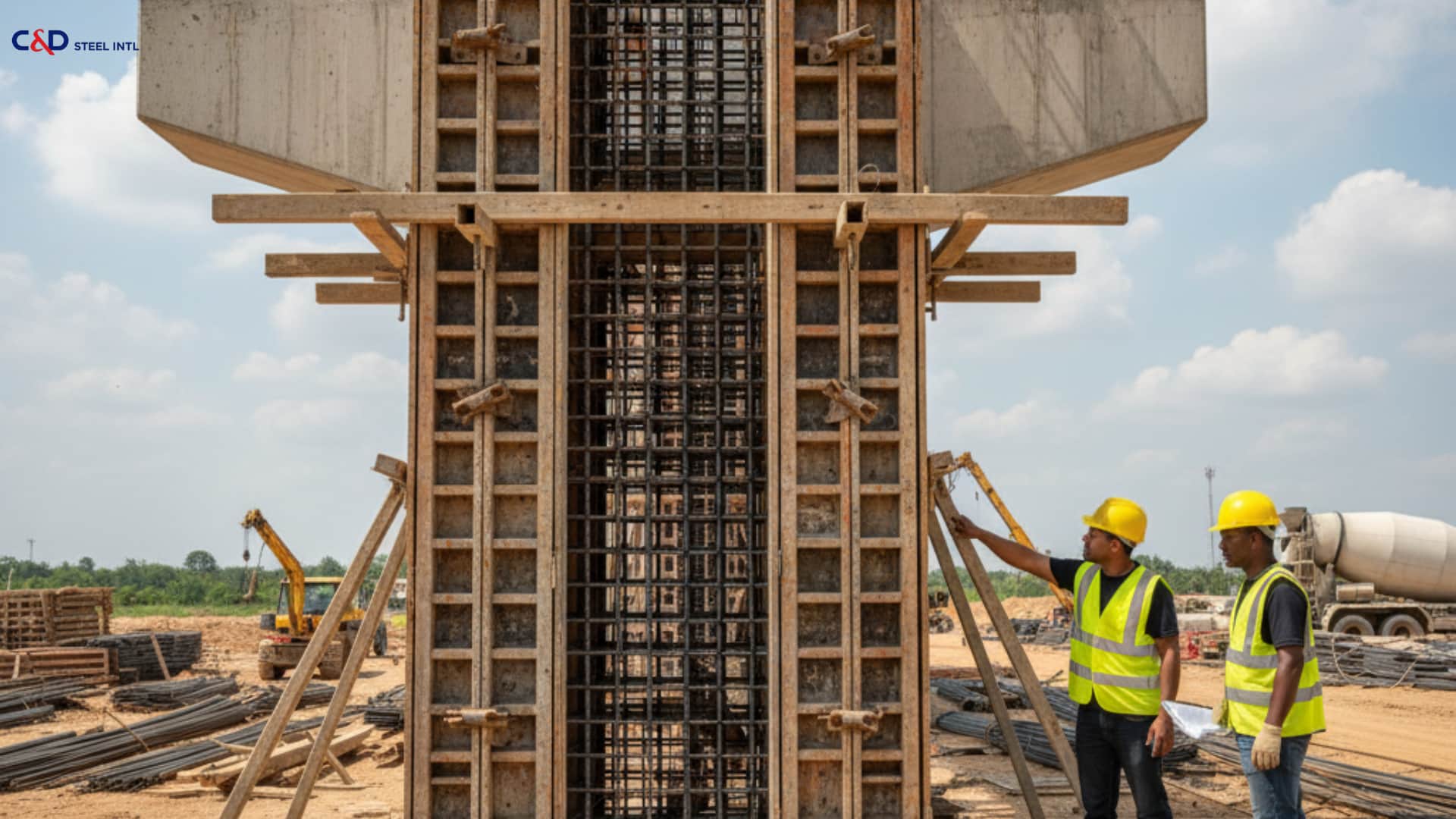
In high-seismic zones (Japan, Chile, Turkey, New Zealand, West Coast USA, Indonesia), yield strength is secondary to energy absorption.
A brittle bar at 600MPa kills. A ductile bar at 500MPa survives.
Seismic-Grade Equivalents
Market Seismic Specification Critical Parameter China HRB400E / HRB500E Tensile/Yield ≥ 1.25 USA ASTM A706 Controlled chemistry; weldability mandate AU/NZ AS/NZS 4671 Class E Explicit earthquake ductility class Europe EN 1998 (Eurocode 8) Ductility class high (DCH)
| Market | Seismic Specification | Critical Parameter |
| China | HRB400E / HRB500E | Tensile/Yield ≥ 1.25 |
| USA | ASTM A706 | Controlled chemistry; weldability mandate |
| AU/NZ | AS/NZS 4671 Class E | Explicit earthquake ductility class |
| Europe | EN 1998 (Eurocode 8) | Ductility class high (DCH) |
Trade note:
Chinese HRB500E and ASTM A706 Grade 80 are functional equivalents in seismic applications—provided the Mill Test Certificate confirms the 1.25 ratio.
What “E” Actually Means
Parameter HRB500 HRB500E Delta Yield strength (min) 500MPa 500MPa — Tensile/yield ratio ≥1.25 ≥1.25 — Actual tested ratio 1.23–1.35 1.28–1.45 Tighter control Elongation ≥15% ≥18% 20%
| Parameter | HRB500 | HRB500E | Delta |
| Yield strength (min) | 500MPa | 500MPa | — |
| Tensile/yield ratio | ≥1.25 | ≥1.25 | — |
| Actual tested ratio | 1.23–1.35 | 1.28–1.45 | Tighter control |
| Elongation | ≥15% | ≥18% | 20% |
Verification step:
Always request the actual tensile-to-yield ratio from the test certificate. Do not rely on grade designation alone.
IV. DIMENSIONAL INTEROPERABILITY: METRIC VS. IMPERIAL
The Common Pitfall
Most specification mismatches are not mechanical—they are dimensional.
A #4 bar (0.500") is not the same as 12mm bar (0.472").
A 16mm bar is not the same as 5/8" bar (15.875mm).The difference matters for:
- Lap splice length calculations
- Clearance and cover
- Bar spacing in congested zones
Metric-Imperial Cross-Reference
US Bar # Nominal Diameter (in) Metric Soft Equivalent Cross-Section Area (mm²) 3 0.375 10mm 71 4 0.5 13mm 129 5 0.625 16mm 200 6 0.75 19mm 284 7 0.875 22mm 387 8 1 25mm 510 9 1.128 28mm 645 10 1.27 32mm 819
| US Bar # | Nominal Diameter (in) | Metric Soft Equivalent | Cross-Section Area (mm²) |
| 3 | 0.375 | 10mm | 71 |
| 4 | 0.5 | 13mm | 129 |
| 5 | 0.625 | 16mm | 200 |
| 6 | 0.75 | 19mm | 284 |
| 7 | 0.875 | 22mm | 387 |
| 8 | 1 | 25mm | 510 |
| 9 | 1.128 | 28mm | 645 |
| 10 | 1.27 | 32mm | 819 |
Hard conversion (exact inch-to-mm) ≠ soft conversion (nearest metric size).
Ensure your structural engineer has accounted for the area difference—not just the diameter label.
Weight Tolerance: The Hidden Variable
Standard Permitted Deviation Commercial Impact GB/T 1499.2-2024 ±3.5% (batch) Stricter; less tonnage risk ASTM A615 ±6% (individual), ±3.5% (lot) Wider variance BS 4449 ±4.5% Moderate
| Standard | Permitted Deviation | Commercial Impact |
| GB/T 1499.2-2024 | ±3.5% (batch) | Stricter; less tonnage risk |
| ASTM A615 | ±6% (individual), ±3.5% (lot) | Wider variance |
| BS 4449 | ±4.5% | Moderate |
Procurement action:
Request batch average weight verification. Do not accept individual bar samples as representative.
V. SPECIAL ENVIRONMENTS: BEYOND BLACK BAR
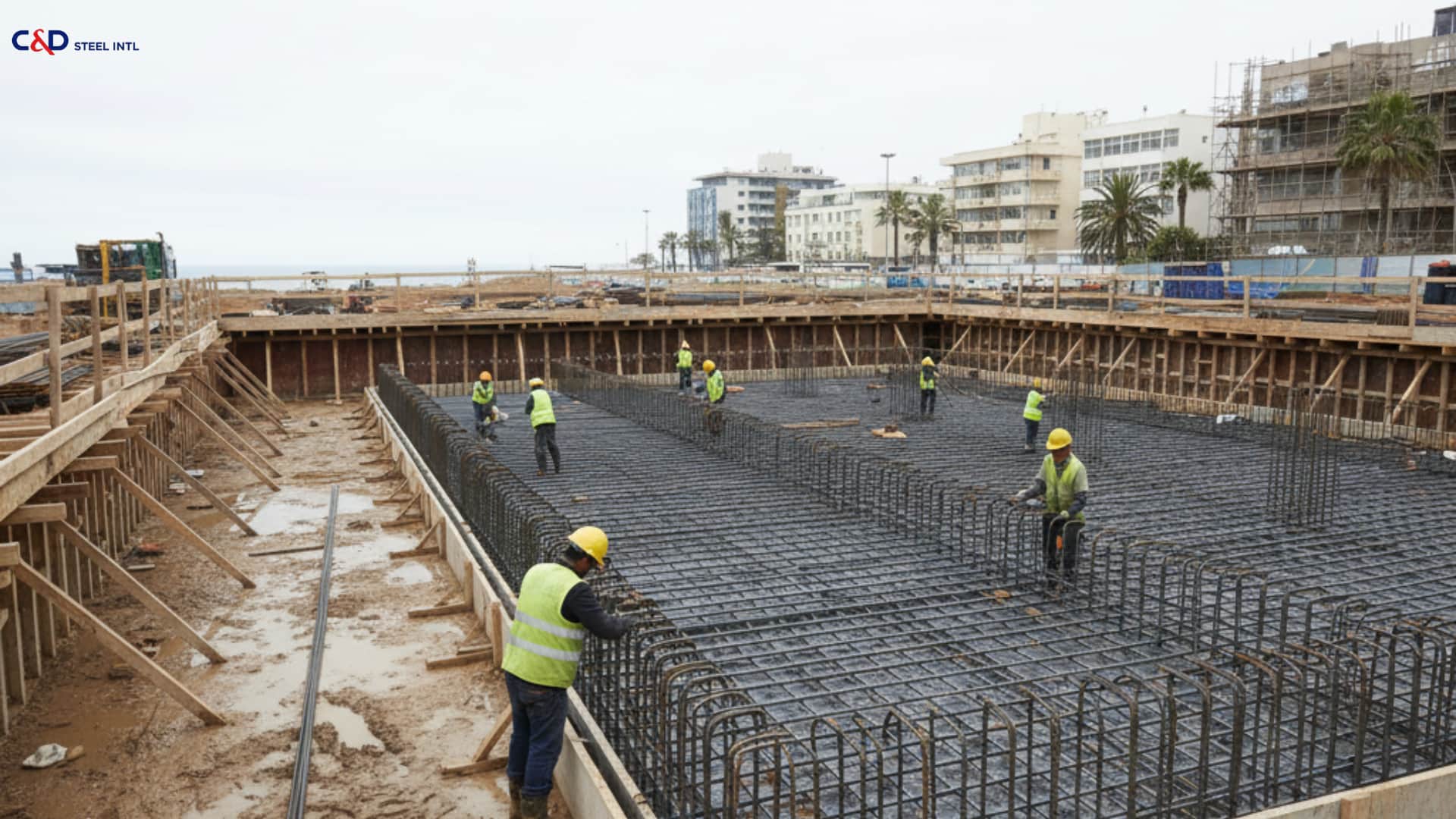
1. Marine & Coastal
Problem: Chloride-induced corrosion
Solution: Chromium-alloyed rebar
Standard Designation Corrosion Reduction GB/T HRB400E-Cr 70%+ vs. black bar ASTM A1035 80–100yr service life EN Stainless clad Higher cost, extreme duty
| Standard | Designation | Corrosion Reduction |
| GB/T | HRB400E-Cr | 70%+ vs. black bar |
| ASTM | A1035 | 80–100yr service life |
| EN | Stainless clad | Higher cost, extreme duty |
Outcome: Up to 100-year service life in tidal/splash zones.
Cost multiplier: 1.3–1.8x black bar—but 0x remediation cost.
2. Heavy Welding / Prefabrication
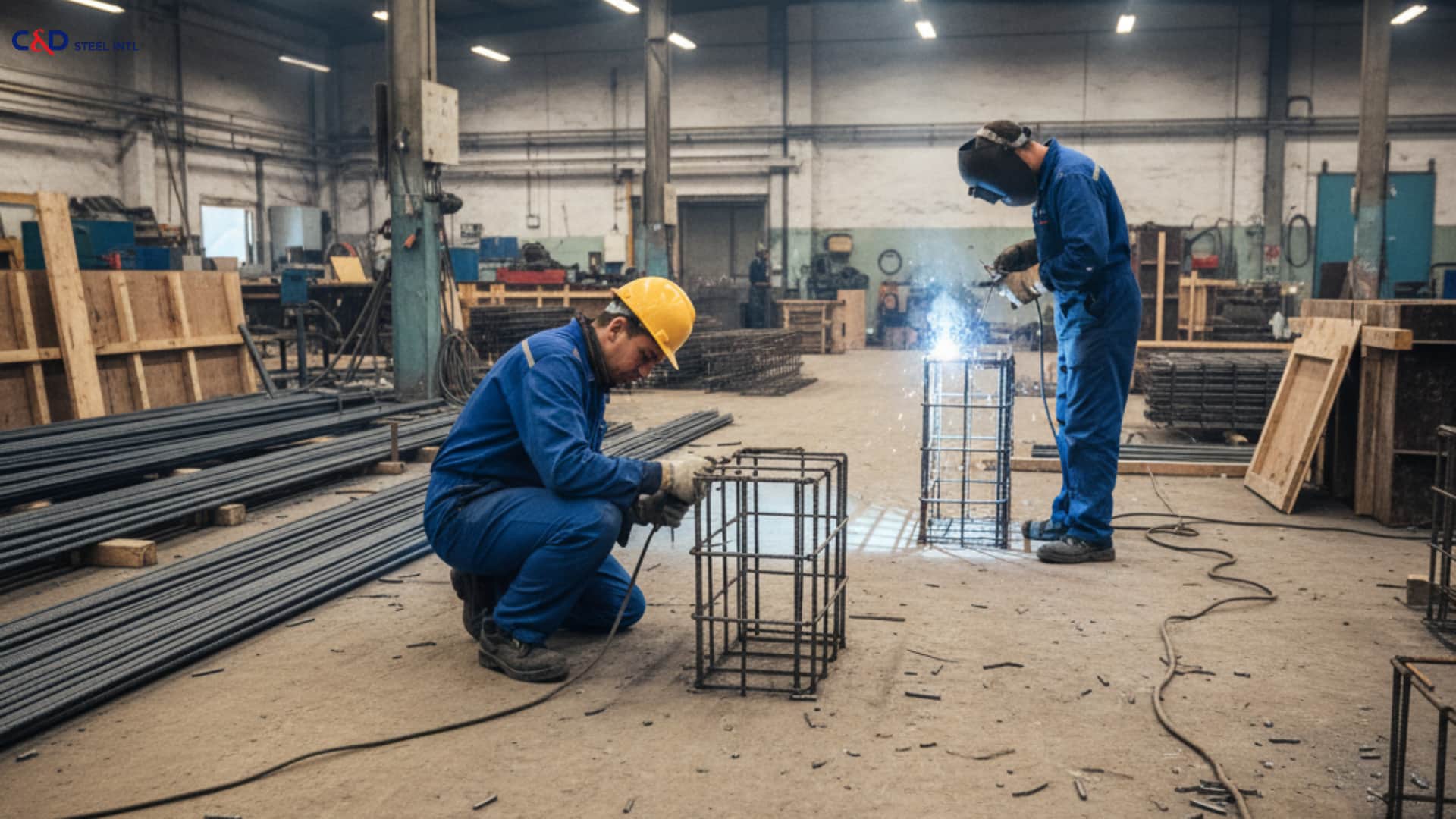
Problem: Carbon equivalent (CEQ) too high → weld cracking
Solution: Low-CEQ chemistry
Standard Weldable Specification CEQ Limit ASTM A706 ≤0.55% GB/T HRB with verified CEQ ≤0.54% (typical) BS Grade 500C ≤0.52%
| Standard | Weldable Specification | CEQ Limit |
| ASTM | A706 | ≤0.55% |
| GB/T | HRB with verified CEQ | ≤0.54% (typical) |
| BS | Grade 500C | ≤0.52% |
Procurement note:
Standard HRB400/500 does NOT automatically guarantee weldability. Request CEQ value on MTC.
3. Dynamic / Fatigue Loads
Application: Railways, bridges, crane beams, machine foundations
2024 GB/T Update:
Projects with cyclic loading must provide specific fatigue performance inspection reports.
General mill certificates no longer sufficient.
Verification:
- 2 million cycle test standard
- Stress range retention ≥95%
- Request third-party fatigue test report
VI. SUPPLIER CHECKLIST: SIX VERIFICATIONS BEFORE PURCHASE
Checkpoint What to Verify Why It Matters 1 Grade match Bar marking = Mill Test Certificate (MTC) Rejected shipments, site delays 2 Tensile/yield ratio ≥1.25 for seismic specs Life-safety compliance 3 Weight tolerance Batch average ≤±3.5% You pay for air, not steel 4 Weldability CEQ ≤0.55% (if welding required) Joint failure, site rework 5 Traceability QR/heat number/bundle ID to mill origin Fraud prevention, audit readiness 6 Carbon data Project-specific EPD, third-party verified CBAM, green tenders, reputational risk
| Checkpoint | What to Verify | Why It Matters | |
| 1 | Grade match | Bar marking = Mill Test Certificate (MTC) | Rejected shipments, site delays |
| 2 | Tensile/yield ratio | ≥1.25 for seismic specs | Life-safety compliance |
| 3 | Weight tolerance | Batch average ≤±3.5% | You pay for air, not steel |
| 4 | Weldability | CEQ ≤0.55% (if welding required) | Joint failure, site rework |
| 5 | Traceability | QR/heat number/bundle ID to mill origin | Fraud prevention, audit readiness |
| 6 | Carbon data | Project-specific EPD, third-party verified | CBAM, green tenders, reputational risk |
VII. PROCUREMENT DECISION TREE
Step 1 – Define application
- Residential/commercial → 400MPa tier
- High-rise/heavy infrastructure → 500MPa tier
- Ultra-high load/specialty → 600MPa tier
Step 2 – Check seismic risk
- Zone 3/4 or similar → Mandate “E” / A706 / Class E
- Confirm tensile/yield ≥1.25 on MTC
Step 3 – Verify dimensional fit
- Metric vs. imperial? Confirm area, not just diameter label
- Verify batch weight tolerance compliance
Step 4 – Assess environment
- Coastal/marine? → Cr-alloy or coating
- Heavy welding? → Low-CEQ, A706 or verified HRB
- Cyclic loading? → Fatigue test report required
Step 5 – Qualify supplier
- Digital traceability enabled?
- Mill-specific EPD available?
- Third-party verification accepted?